Rooms
The Mud-Cloth Living Room: Let One Piece Lead
How to style a living room around one Bògòlanfini mud cloth from Mali, with calm walls, plain textiles and warm light so the cloth can shine.
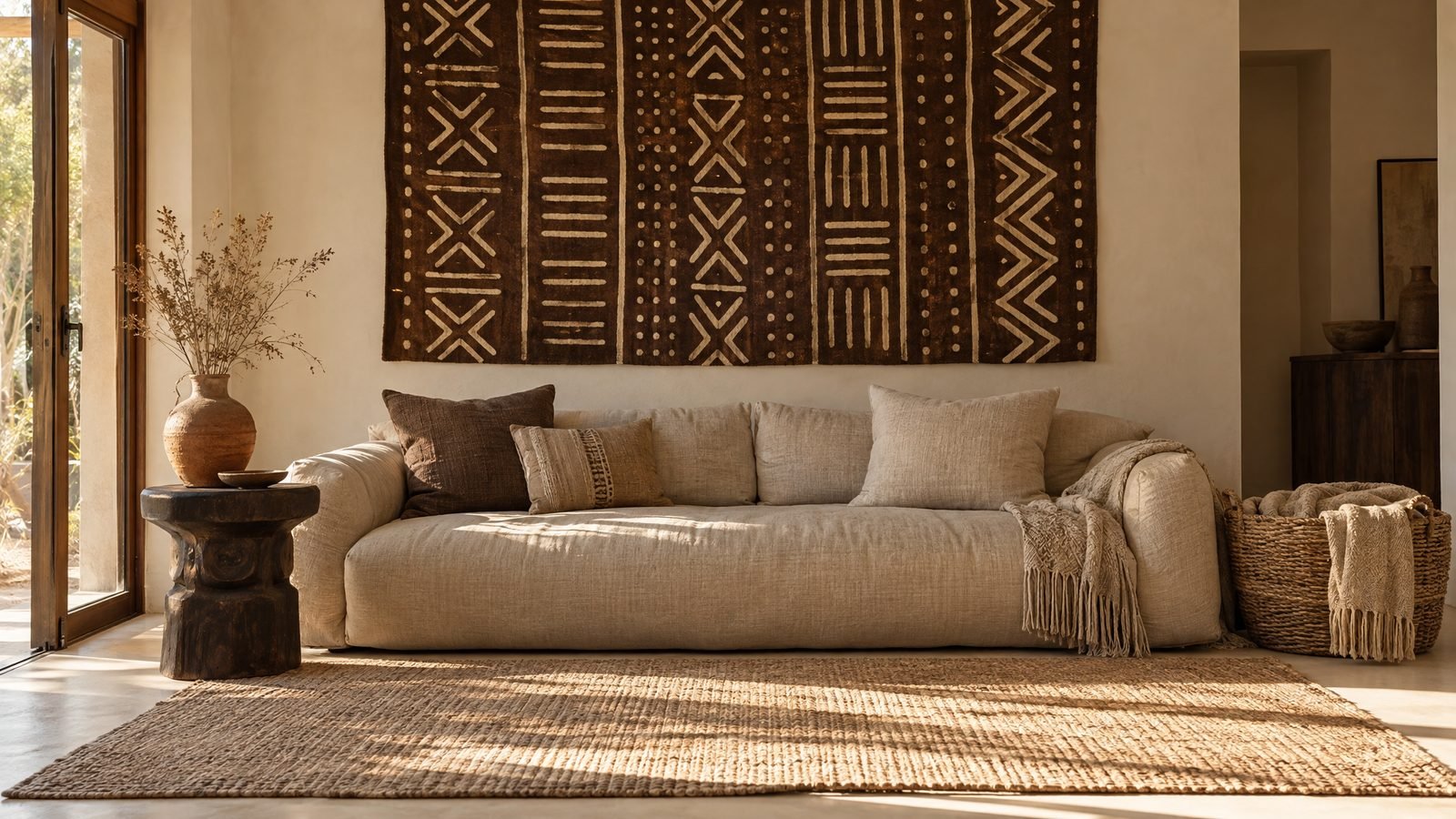
A single mud cloth can carry a whole living room. The trick is letting it. Bògòlanfini, the hand-painted cotton cloth of Mali, has strong lines, deep earth colour and a slow, steady rhythm. Give it a calm stage and the room feels finished. Crowd it with other loud things and it gets lost.
This is a plan for a living room where one cloth leads and everything else quietly agrees.
Why one piece is enough
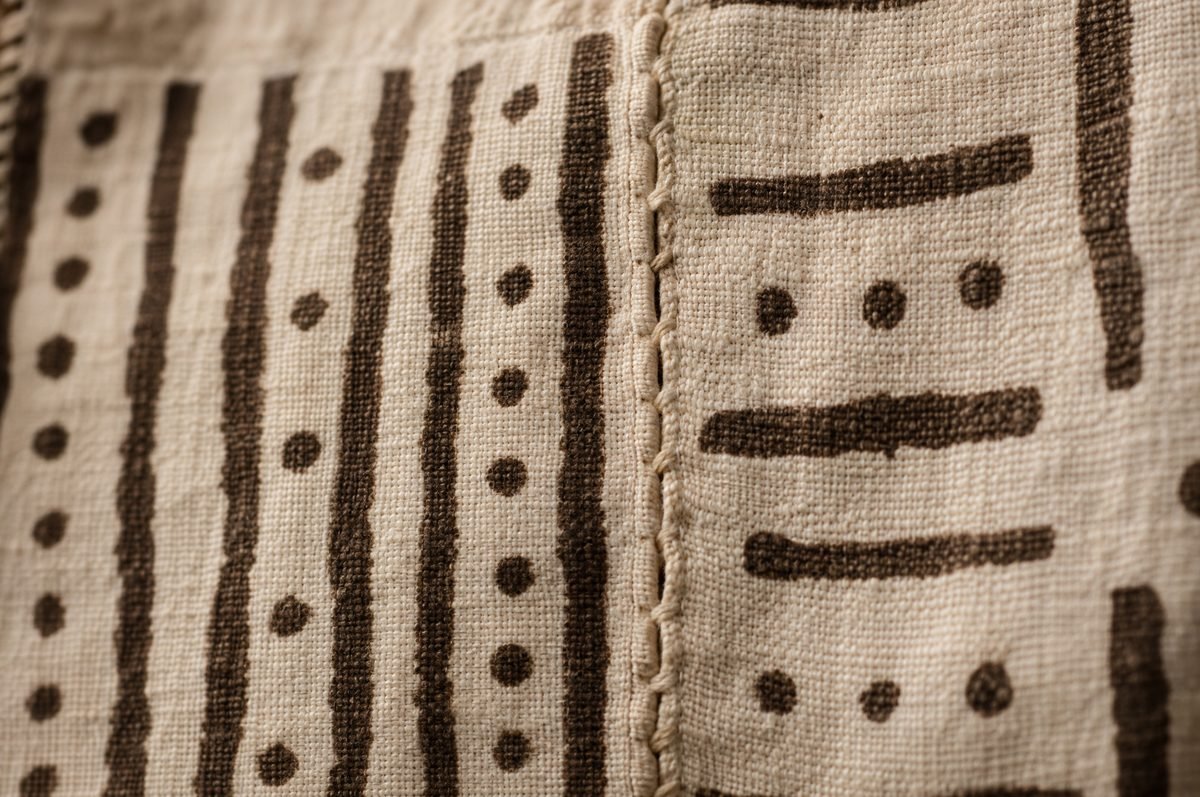
Bògòlanfini, often shortened to bògòlan, comes from Mali. The name is usually explained as "cloth made with mud". Narrow strips of handwoven cotton are sewn together, soaked in a leaf dye, then painted by hand with mud that has been left to ferment. Every line is drawn, not printed.
That handmade energy is strong. One real cloth already brings pattern, colour, texture and a story. When you add three more bold prints beside it, they all start to compete. When you give it space, people notice it, ask about it, and the room feels settled.
Give the cloth one clear job
Decide where the mud cloth will live before you change anything else. Each spot has a different effect.
- On the wall above the sofa. The biggest impact. The cloth becomes the room's artwork and sits at eye level, where the hand-drawn lines can be seen up close.
- Over the back or arm of the sofa. Softer and easier to change. It also makes the sofa feel layered and lived in.
- On a bench or the end of a daybed. Good in a small room, where wall space is already taken.
- As cushion covers. Lovely, but buy covers sewn by makers from cloth woven for that purpose. Please do not cut up an old or large cloth to make them.
Keep mud cloth off the floor. It is a painted cotton textile, and feet and grit will wear the painted surface quickly. If you love the look underfoot, choose a woven rug in its own right.
Let everything else step back
Once the cloth has its place, quieten the rest of the room around it.
Walls
Warm cream or soft sand. From the Warm Earth palette, think #F5EFE0 or #E8D9BC. Bright white can look harsh beside the brown and cream of the cloth, and a strong wall colour fights with it.
Sofa and big textiles
Plain is your friend. Oatmeal linen, sand cotton, or a deep earth tone like rust or dark brown. Choose texture over pattern: a nubby weave, a slubby linen, a soft wool blanket.
Other pattern
Allow one small-scale pattern at most, such as a fine stripe on a cushion. Keep it in the same colour family as the cloth.
Wood, fibre and clay
One dark carved piece, like a low stool used as a side table. One woven basket for blankets. One terracotta or clay vessel. Three natural materials, each used once, is plenty.
Repeat the cloth's colours
Look closely at your mud cloth and name its colours. Most have a dark tone (deep brown or near black) and a light tone (cream or pale ochre). Some have rust, red or a soft yellow.
Pick two of those colours and repeat each one around the room about three times. For example:
- Dark brown: the carved stool, a picture frame, the base of a lamp.
- Cream: the walls, a linen cushion, a clay vase.
- Rust (if your cloth has it): one cushion, a throw, a terracotta pot.
This simple echo is what makes a room look planned rather than bought in one go. The eye travels from the cloth to the stool to the frame and back again.
A room plan you can copy
Here is a calm mud-cloth living room in eight parts.
- Walls: warm cream.
- Lead piece: one Bògòlanfini cloth, hung flat above the sofa.
- Sofa: plain oatmeal or sand linen.
- Cushions: two plain (sand and rust), one with a fine stripe.
- Rug: jute or a plain wool rug in a soft neutral.
- Side table: a carved wooden stool.
- Storage: a large woven basket for throws.
- Light: a floor lamp and one table lamp with warm bulbs, plus a candle in a clay holder.
Notice what is missing. There is no second big textile on the wall, no busy rug and no shelf full of small things. That space is part of the design.
Try this today
You do not need to buy anything to test this. You only need an hour and the cloth.
- Clear the stage. Take every cushion, throw and small object off the sofa and nearby surfaces.
- Place the cloth. Drape it or pin it gently where you plan to keep it. For a quick test on the wall, hold it up with a helper and step back.
- Add back slowly. Return only the pieces that are plain, textured, or share the cloth's colours. Leave the rest in a box.
- Take a photo in black and white. It shows balance without colour distracting you. If one side looks heavy, move a lamp or basket.
- Live with it for a week. Then decide what, if anything, is truly missing.
Hanging and caring for it
Hang mud cloth so its weight is spread along the top edge, never on a few nails through the fabric. A sleeve sewn to the back with a wooden batten slipped through it works well. Keep it out of strong direct sun, which fades the deep tones over time.
If it needs cleaning, a gentle hand wash in cool water with a mild soap is usually best. The colour can bleed, so wash it alone and dry it flat in the shade. Ask the maker or seller for their advice too, since every cloth is a little different.
Choose a real cloth, and know its story
A handmade Bògòlanfini cloth usually shows a few honest signs: seams where the narrow strips are joined, lines with small wobbles from the hand, and colour soaked into the fibre rather than sitting on top. Printed copies on wide canvas look flat and perfectly even.
Ask the seller who made the cloth and where. Buying from makers, cooperatives and fair-trade sellers means the skill stays alive and the people who hold it are paid for it. Then you have something better than a look. You have a cloth with a name, a place and a story you can tell when someone asks.
If you would like a gentle next step, the free Afrohemian Starter Guide walks you through palettes, textiles and the main rooms, one calm page at a time. Get the free Starter Guide.
Start with the one cloth you love. Let it lead, and let the room breathe around it.